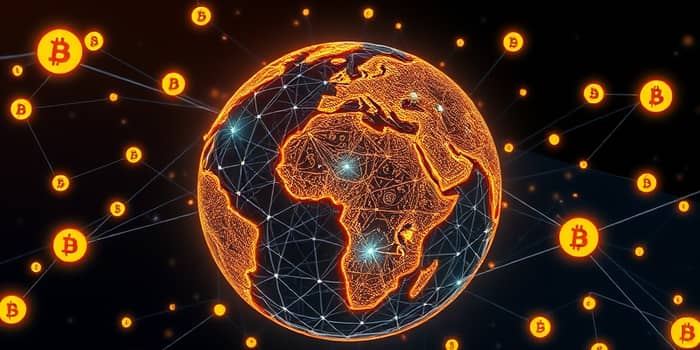
Web3 Finance marks a profound shift in how we create, transfer, and govern value in a digital age. By harnessing distributed ledgers, programmable digital assets, and community-driven governance, this new paradigm promises to dismantle centralized gatekeepers, foster inclusivity, and reimagine traditional financial services for everyone.
At the heart of Web3 Finance lies a bold vision: replace hierarchical intermediaries with peer-to-peer networks secured by cryptography. Rather than routing transactions through banks or large corporations, blockchain platforms record transfers on public, immutable ledgers.
Smart contracts automate complex operations without human oversight, executing payments or loans precisely when conditions are met. Such innovation enables real-time settlements and reduces reliance on legacy back-office processes.
One of Web3 Finance’s most transformative features is fractional ownership democratizes access to traditionally illiquid markets. Through tokenization, real estate, private equity, and even art can be divided into digital shares, enabling anyone to participate with minimal capital.
These tokens also serve as receipts for staked collateral or liquidity contributions, unlocking composability: your position in one protocol becomes collateral in another without withdrawal. Hybrid models blend Web3 with legacy systems via next-generation payment cards tied to wallets, bridging the old with the new.
Web3 Fintech offers a lifeline to the estimated 1.7 billion unbanked people worldwide. With only a smartphone and self-custody wallet, individuals gain access to savings, loans, and payments without opening a traditional bank account.
By lowering cross-border fees and accelerating settlement times, communities in emerging economies can retain more of their earnings. Proof-of-reserves and on-chain transparency further enable auditors and regulators to verify solvency and stability in real time, inspiring trust where traditional systems have often failed.
Since 2018, investment in Web3 infrastructure has surged. Equity funding, developer activity, job listings, and academic research all point to a maturation beyond speculative fervor. Peak daily trading volumes on decentralized exchanges surpassed $10 billion in DeFi transactions, underscoring real-world utility.
Open-source communities iterate rapidly on protocol improvements—layer-2 scaling, cross-chain bridges, and privacy enhancements—addressing early criticisms of performance and security. With each upgrade, adoption spreads from niche enthusiasts to enterprises exploring tokenized bonds, programmable payroll, and supply chain finance on public networks.
No paradigm shift is without growing pains. Web3 networks grapple with scalability bottlenecks that can cause congestion and high fees during peak usage. Interoperability between disparate chains remains an evolving frontier, risking liquidity fragmentation.
Governance poses another challenge: decentralized autonomous organizations can flounder when token-based voting concentrates power among early investors. Privacy advocates criticize transparent ledgers for exposing transactional data, while traditionalists dismiss Web3 as marketing hype lacking real substance.
Regulatory frameworks are still catching up. Stablecoin depegging incidents and margin call events highlight systemic risks. Yet proactive dialogue between developers, policymakers, and auditors can pave the way for harmonized compliance standards that preserve innovation without sacrificing safety.
Despite obstacles, the transformative potential of Web3 Finance is undeniable. By embedding financial assets into everyday online activities, individuals regain sovereignty over wealth, institutions benefit from transparency, and global communities access tools once reserved for elite players.
As developers refine protocols, enterprises pilot tokenized securities, and regulators adapt to on-chain governance, the foundation for a more inclusive, efficient, and resilient financial ecosystem takes shape. Everyone—whether a smallholder farmer in Nairobi, an artisan in São Paulo, or a startup founder in Berlin—can participate in this unfolding narrative.
Embracing Web3 Finance requires curiosity, collaboration, and a willingness to rethink entrenched systems. Yet the rewards are profound: a world where value flows freely, assets are accessible to all, and trust is encoded in transparent, self-enforcing code. This is not just a technological revolution—it is a chance to redefine what finance can be, for everyone, everywhere.
References