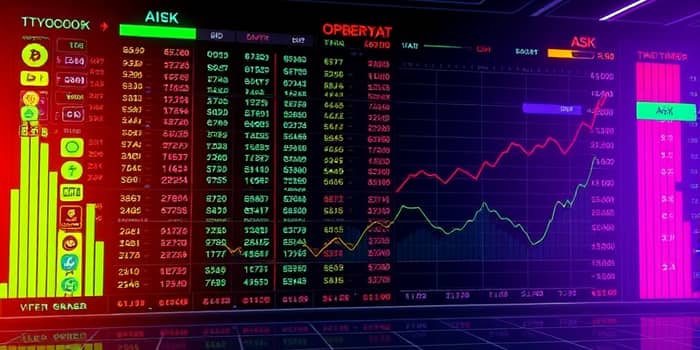
Cryptocurrency markets pulse with data, and at their core lies the order book—a powerful tool that can transform how you engage with price action.
An order book is a digital ledger that displays all current buy and sell orders for a specific trading pair on a centralized exchange. It offers a live snapshot of market supply and demand, updating in real time as participants submit, modify, or cancel orders.
Unlike static trade histories, the order book reveals unseen intentions, enabling traders to gauge buying and selling pressure before prices move. By watching this flow, you gain a deeper understanding of market sentiment, liquidity, and potential price levels.
Mastery of order books can feel daunting at first, but each piece of data you interpret adds a new lens through which to view market movements. Embrace the challenge, and let the order book guide your growth as a trader.
Order books are organized into two sides: bids (buy orders) and asks (sell orders). Each side is color-coded and sorted to show the most competitive prices at the top.
Each component works together to create a transparent view of market dynamics, allowing you to identify support and resistance and optimize your entries and exits.
At the core of every exchange is a matching engine that pairs orders based on price and time priority. Here’s a simplified overview:
Visual tools like depth charts and heatmaps project cumulative volumes, helping traders anticipate market movements effectively. Observing aggressive orders eating through bids or asks offers real-time signals of momentum shifts and potential reversals.
Understanding raw numbers is one thing; applying that knowledge is another. Use these practical steps to integrate order book analysis into your trading playbook:
Combining order book signals with technical indicators like moving averages or RSI creates a powerful trading edge. For example, a breakout above a bid wall—confirmed by rising volume—can justify a high-conviction long position.
As you grow more comfortable with reading order books, explore advanced concepts that provide an extra edge:
Iceberg Orders: Large orders hidden in smaller visible slices to mask true size. Watch for repeated replenishment at the same price level.
Order Spoofing: Fake walls placed to manipulate sentiment. Validate large orders by checking if they break down quickly or vanish.
Time-Weighted Strategies: Execute large trades by slicing an order into multiple limit orders over time to reduce market impact.
Recognizing these tactics allows you to navigate traps and empower your trading decisions with enhanced clarity and confidence.
Markets are ever-changing, and order books reflect that dynamic nature. Regularly review your performance and adapt your methods:
By committing to ongoing learning, you harness deeper market understanding and maintain an edge in volatile crypto environments.
Remember, every order book tells a story of buyer and seller intentions. By mastering this narrative, you don’t just read numbers—you read human behavior. Let the order book be your guide, and empower your trading journey with confidence and insight.
References