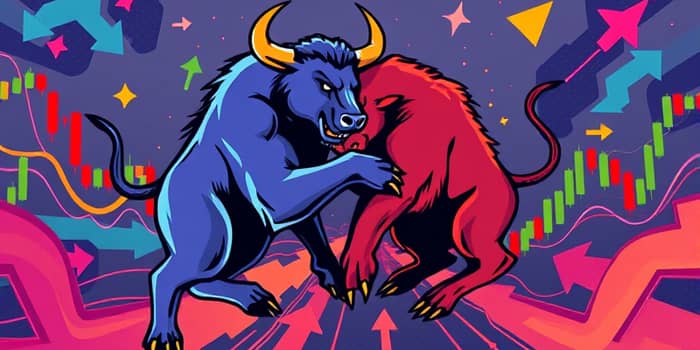
Cryptocurrency markets pulsate through cycles of hope and fear, rewards and losses. Grasping these rhythms empowers investors to navigate volatility with confidence and purpose.
Market cycles describe the recurring phases of rising and falling prices driven by shifts in supply, demand, sentiment, and external forces. In crypto, sustained optimism fuels powerful uptrends, while pessimism and liquidity crunches usher in bear markets. These cycles are not random swings; they follow patterns influenced by technology advances, macroeconomic developments, regulatory moves, and collective psychology.
Simply put, a bull market emerges when demand outpaces supply and traders chase new highs, while a bear market grips when selling overwhelms buying, shattering confidence. Between extremes lie consolidation periods where prices trade sideways until the next catalyst arrives.
Every cycle unfolds through four key stages, each offering distinct opportunities and risks. Understanding these phases lets investors align strategies with prevailing conditions instead of reacting emotionally.
At the bottom of the accumulation phase, smart money quietly positions for gains, laying the seeds for the next upward surge. As momentum builds, retail investors join, sparking a markup. In distribution, savvy holders realize profits as prices plateau or reverse. Finally, markdown sees intense selling until fear subsides and the cycle resets.
Unlike traditional markets where cycles may span decades, crypto moves at lightning speed. Bitcoin’s halving events—programmed supply cuts every four years—have historically heralded major bull runs, lasting up to two years. Bears then follow, often plunging asset values by 70–90% in just months.
These trends compress typical market behavior into rapid sequences, but they remain subject to unpredictable external influences. While past patterns around halvings and liquidity expansions offer guidance, they are not guarantees. Maintaining perspective and flexibility is key.
Major events can ignite rallies or trigger crashes. Recognizing catalysts helps investors anticipate inflection points and adjust exposure.
For example, adoption of Bitcoin as legal tender in El Salvador and major corporate treasury allocations propelled massive buying in 2020–2021. Conversely, regulatory bans and major exchange scandals have precipitated swift sell-offs.
Behind every chart movement lies human emotion. FOMO, greed, and herd behavior amplify rallies, while fear, doubt, and capitulation drive panicked sell-offs. Recognizing these forces can prevent costly mistakes.
Traps lurk in every cycle. A bull trap lures buyers into a false rally before reversing, while a bear trap tempts sellers into a brief dip that quickly rebounds. Developing self-awareness and disciplined risk controls is essential to sidestep these pitfalls.
No strategy fits every environment. Tailoring your approach fosters resilience and positions you to unlock gains or protect capital.
Quantitative indicators sharpen decision-making. Watching chart patterns—such as higher highs and higher lows for bull confirmation, and lower highs/lower lows for bears—signals trend strength. Volume surges validate breakouts, while declining liquidity warns of waning interest.
On-chain analytics reveal deeper insight into network activity. Metrics like active addresses, hash rate, and token velocity shed light on adoption trends. Sentiment indices, futures funding rates, and derivatives open interest expose crowded trades and potential reversals.
Market cycles will ebb and flow, but growth comes to those who prepare. By seeing volatility not as turmoil but as opportunity, investors can navigate every phase with confidence. Adopting a long-term investment perspective ensures that temporary downturns become doors to accumulate quality assets at value.
Whether you’re a seasoned trader or a newcomer to crypto, remember that every bear market carries the seeds of the next bull run. Stay curious, continuously learn, and adapt strategies based on evolving dynamics. Above all, cultivate patience—real fortunes are often built during the quiet moments between peaks and troughs.
With these insights, frameworks, and practical tools, you are equipped to face the ever-changing landscape of cryptocurrency markets. Embrace the journey, harness market cycles, and chart your own path toward financial growth and empowerment.
References