In today’s rapidly evolving financial landscape, the advent of asset tokenization is not merely a technological novelty but a profound shift that carries the potential to reshape global investment paradigms. By converting tangible and intangible assets into digital tokens on a blockchain, tokenization fosters unprecedented levels of transparency, security, and access.
From high-value real estate properties to fine art collections, tokenized assets are forging new pathways for investors of every background. This article explores how this revolutionary process works, the benefits it unlocks, and the bright horizon it points toward for democratized finance.
At its core, immutable, decentralized record technology assures that ownership rights are stored securely on distributed ledgers, eliminating reliance on centralized intermediaries. Through blockchain’s cryptographic safeguards, asset owners and investors gain confidence that records cannot be altered or tampered with.
Moreover, tokenization introduces fractional ownership of premium assets, allowing dozens or even thousands of participants to share ownership of a single property, work of art, or equity stake. This fragmentation of traditionally illiquid, high-value assets dramatically lowers the barriers to entry.
Robust market forecasts underline the transformative scope of tokenization. Over the next decade, various sectors are poised for explosive growth as digital tokens proliferate across financial markets.
These figures reflect a powerful momentum that is being driven by heightened institutional interest, regulatory clarity, and rapidly improving blockchain infrastructure.
The journey from a physical asset to a tradable digital token involves several critical steps:
Smart contracts enable automated execution of smart contracts without manual intervention, reducing costs and settlement times from days to minutes.
Tokenized assets deliver multiple advantages across the investment lifecycle. Liquidity, once the greatest barrier to entry for many asset classes, is greatly enhanced.
Settlement speeds accelerate, as transactions that once required multiple intermediaries and days to complete can now be finalized in moments on a blockchain. This yields significant cost savings, with some estimates citing potential reductions of up to $20 billion per year in global clearing and settlement expenses.
With permissionless liquidity and open access, investors can trade tokens around the clock without geographic constraints.
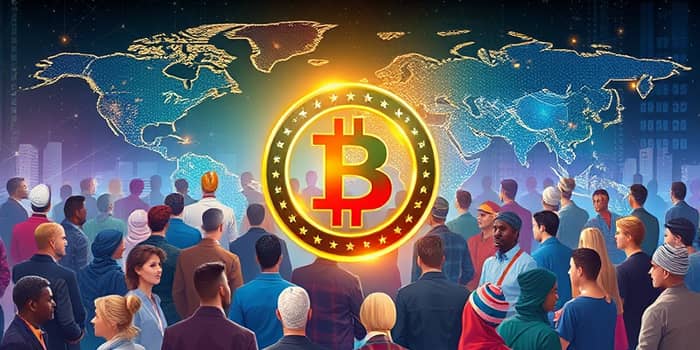
Perhaps the most inspiring aspect of asset tokenization is its capacity to democratize investment opportunities. Historically, only accredited investors could access private equity rounds or high-end real estate deals. Tokenization changes this narrative.
By offering fractional shares in prestigious assets, token platforms empower retail investors to build diversified portfolios that include luxury real estate, rare collectibles, and private company equity.
Smaller capital requirements transform previously unattainable markets into inclusive ecosystems where participation is limited only by personal choice.
Looking ahead, the convergence of tokenization with emerging technologies will unlock new use cases and markets. Integration with decentralized finance (DeFi) platforms will enable lending, staking, and yield generation against tokenized assets.
Furthermore, advances in AI and IoT will enhance asset monitoring, automated compliance, and real-time valuation updates, creating an environment of groundbreaking investment inclusivity where assets self-report performance metrics.
Tokenized assets represent far more than a novel financial instrument; they embody a shift toward an equitable financial future. By lowering barriers, improving efficiency, and reinforcing security, tokenization paves the way for a world where investment opportunities are not reserved for the elite, but available to all.
As blockchain infrastructure matures and regulatory frameworks strengthen, the true potential of tokenized assets will unfold—propelling the democratization of finance and empowering individuals around the globe to participate meaningfully in wealth creation.
References