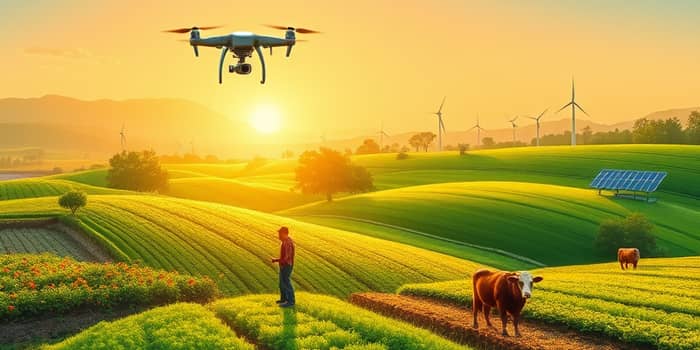
In an era of climate uncertainty and growing global populations, sustainable agriculture emerges as a beacon of hope. Farmers, innovators, and communities worldwide are rallying behind practices that promise not only increased yields but also resilient ecosystems, robust rural economies, and a healthier planet.
The sustainable agriculture market has witnessed a remarkable transformation over the past decade. Valued at USD 1.93 billion in 2022, it is projected to expand at a steady compound annual growth rate, reaching between USD 16.1 billion and USD 250 billion by 2028, depending on regional forecasts. These figures underscore a fundamental shift in how societies prioritize environmental stewardship alongside economic prosperity.
Analysts anticipate a global CAGR ranging from 5.4% to 11.5% between 2024 and 2034, with especially rapid growth in North America and the Asia-Pacific region. This trajectory reflects more than just consumer trends—it signifies a strategic realignment of supply chains, investment flows, and governmental policies toward regenerative and low-impact food systems.
As the market matures, early adopters of precision irrigation reduces water waste and other smart solutions are poised to capture premium pricing, secure long-term contracts, and build brand loyalty. By aligning technological innovation with ecological imperatives, stakeholders can unlock unprecedented returns while safeguarding resources for future generations.
Multiple factors converge to power the shift toward sustainable farming. Understanding these drivers reveals paths for stakeholders to engage, invest, and innovate effectively.
Together, these dynamics create a powerful ecosystem where farmers, agribusinesses, and policymakers collaborate to scale impact. By leveraging data-driven insights and policy frameworks, the sector can address global challenges head-on.
Sustainable farming is not merely an ethical choice; it presents compelling economic advantages. Companies adopting precision agriculture and regenerative methods often witness substantial cost reductions. For example, automated systems cut irrigation costs by up to 30%, while organic inputs can reduce chemical expenses and promote long-term soil fertility.
Studies show that practices like cover cropping yield a 3–5% increase in harvest volume and can drive up market prices by 2% thanks to premium certifications. Additionally, land values may climb by 3% as fertility improves and carbon credits become monetizable assets, offsetting the 1–3% rise in input costs during the transition phase.
Beyond direct farmgate benefits, sustainable agriculture fuels vitality in rural areas by creating new roles for technicians, agronomists, and logistics specialists. Long-term profitability and environmental resilience are no longer stand-alone goals; they are mutually reinforcing outcomes that redefine success for communities and investors alike.
Farmers around the world are embracing a suite of practices designed to optimize yields, protect ecosystems, and capture emerging revenue streams from carbon markets. The following table highlights key methods, their benefits, and implementation challenges.
These techniques form the backbone of regenerative and climate-smart agriculture. By rotating crops, integrating agroforestry, and deploying AI-powered analytics, farmers can tailor inputs to precise field conditions, reducing waste and maximizing productivity.
In livestock systems, rotational grazing and improved pasture management have cut feed costs while enhancing animal health and carbon sequestration. Such holistic approaches demonstrate how integrated farming can deliver both environmental and financial returns.
Despite clear advantages, transitioning to sustainable practices poses several challenges. Recognizing and addressing these barriers is critical for scaling impact.
Collaborative efforts involving governments, financial institutions, and extension services are essential to bridge these gaps. Innovative financing models—such as pay-for-performance contracts and carbon credit programs—can mitigate up-front burdens and unlock broader participation.
Regional trends highlight diverse pathways to sustainable agriculture. In the United States, an 11.5% CAGR underscores robust investment in biologics and precision tools. Europe’s Common Agricultural Policy is channeling subsidies toward soil health and biodiversity, while Asia-Pacific nations are scaling smart irrigation to combat water scarcity.
Countries like India and Vietnam are leveraging green financing and public-private partnerships to support smallholders. This has led to dramatic improvements in yield stability and poverty reduction, particularly when combined with targeted training and digital literacy programs.
Historically, productivity gains in agriculture have been among the most potent drivers of poverty alleviation. By intensifying total factor productivity through sustainable methods, the sector has demonstrated its capacity to lift rural populations and preserve natural capital simultaneously.
The path to a secure harvest is paved with intentional choices that balance economic vitality with ecological integrity. By integrating precision tools, regenerative practices, and supportive policy frameworks, stakeholders can reap rewards that extend beyond the farmgate to bolster global food security and climate resilience.
As we look ahead, collaboration will be the cornerstone of progress. Governments, businesses, research institutions, and farmers must forge partnerships that accelerate innovation and democratize access to resources. In doing so, we ensure that every harvest—today and tomorrow—nurtures both people and the planet.
References