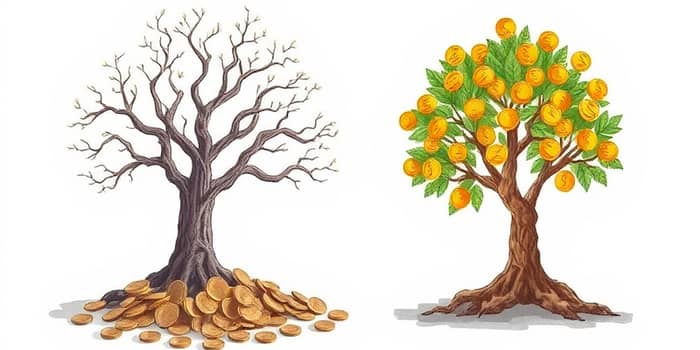
Every decision we make carries unseen consequences. In finance, the most powerful of these is the forgone benefit of another choice. When you decide not to invest, you aren’t just holding cash—you are surrendering the chance for that money to grow. This concept, known as opportunity cost, is at the heart of every personal and professional financial strategy. By understanding and managing it, you gain clarity, discipline, and an edge on your path to lasting wealth.
At its core, opportunity cost is the return you give up when you choose one option over the next best alternative. It is not always visible—yet it is always present. Whether you’re deciding between a savings account and the stock market or weighing the hours spent on leisure versus learning a new skill, there is a hidden cost behind every trade-off.
Think of opportunity cost as the shadow of your choices. If you pick a fixed deposit at 2% interest instead of a diversified portfolio targeting 8%, the difference in returns represents the cost of that safety. Over years and decades, these differences compound, shaping the financial reality you eventually face.
In periods of high interest rates, the safe option can look attractive—but it comes at a price. Holding cash in a high-yield account still may underperform equities over the long run. Conversely, when rates are historically low, the gap between saving and investing narrows, tempting many to postpone action. However, delaying investment means losing precious time for compounding to work its magic.
Ignoring opportunity cost can lead to hidden mistakes:
The formula is straightforward: opportunity cost equals the return of the best forgone option. If you choose Investment A at 8% over Investment B at 10%, you’re effectively sacrificing 2% each year.
Let’s visualize this with real numbers. Imagine you spend $54 monthly on coffee instead of investing. At a 3% annual return compounded monthly, that small habit costs you:
Over a decade, small decisions add up to thousands of dollars in lost growth. Multiply that by every discretionary expense you defer or investment you overlook, and the hidden cost becomes staggering.
Opportunity cost touches every corner of your financial life. Consider these scenarios:
On a daily level, the concept is equally powerful. A $20 movie ticket and three hours of your time might cost you an online course that boosts your income. A side hustle ignored today could be tomorrow’s primary revenue stream. By asking yourself, “What am I giving up right now?” you sharpen your decision-making and propel your growth mindset.
Opportunity cost cannot be eradicated—it is the natural result of limited resources. However, you can manage it to your advantage. Here are four strategies to make every choice count:
Distinguishing opportunity cost from other terms is essential:
• Sunk costs are past expenses that shouldn’t influence future choices. Your college tuition is a sunk cost, but the career path you select now has real opportunity costs.
• Risk measures potential variability in returns, focusing on a single option. Opportunity cost compares several options to reveal the full picture of what you gain or lose.
By recognizing these differences, you cultivate holistic financial awareness and make more informed decisions.
Every choice is a step on your financial journey. When you embrace the power of opportunity cost, you see beyond price tags and market quotes. You understand that every dollar, hour, and idea has an alternative waiting in the wings. By managing these trade-offs consciously, you align your resources with your highest aspirations.
Take a moment today to review your recent decisions. Identify where you might have settled for security at the expense of growth, or hesitated when action was needed. Use the lessons of opportunity cost to craft a proactive, disciplined strategy—because the cost of not investing is not just numbers on a page; it is the future you never built.
Seize your opportunities, harness the compounding force of time, and remember that the most valuable investments are often the ones you decide to make.
References