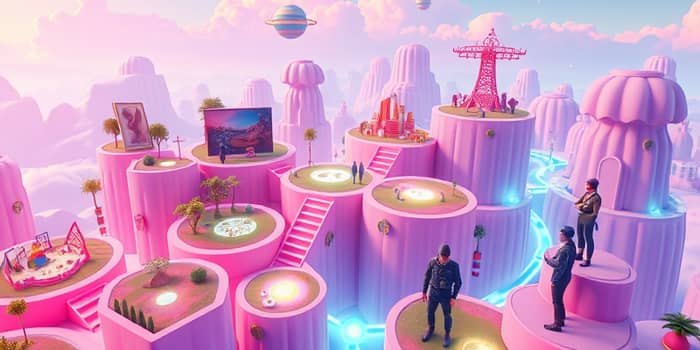
In the evolving landscape of Web3, two concepts have emerged at the forefront of digital innovation: NFTs and the metaverse. Together, they are reshaping how we think about ownership, creativity, and community in virtual environments.
Non-Fungible Tokens that represent digital ownership are unique, blockchain-based tokens that prove authenticity, scarcity, and provenance of art, collectibles, music, and more.
The metaverse as a shared virtual universe offers immersive 3D spaces where users can socialize, conduct business, attend events, and explore worlds that persist even when they log off.
Blockchain technology, first popularized by cryptocurrencies like Bitcoin, paved the way for programmable tokens and decentralized applications. The introduction of smart contracts on Ethereum enabled developers to create token standards such as ERC-721, laying the foundation for NFTs.
These token standards ensure that each NFT is unique and non-interchangeable, unlike fungible cryptocurrencies. By embedding metadata and ownership details on-chain, NFTs deliver trusted, transparent blockchain-based transactions that anyone can verify without relying on a central authority.
Simultaneously, advancements in AR and VR technologies fueled the concept of persistent virtual worlds. These immersive environments, collectively known as the metaverse, rely on shared protocols and open frameworks to allow interoperability and rich user experiences.
The convergence of NFTs and the metaverse unlocks a wide spectrum of applications, empowering creators and consumers alike to participate in vibrant digital economies.
Key use cases include:
These examples illustrate how NFTs not only represent digital assets but also fuel engagement, community building, and sustainable economic models within immersive worlds.
At the heart of this revolution is the concept of true digital ownership. NFTs enable individuals to hold verifiable rights to virtual goods, much like owning a rare trading card or piece of art in the physical world.
Ownership and scarcity are enforced on-chain, giving each asset a transparent transaction history and measurable market value. This provable scarcity encourages collection and investment, driving demand and liquidity in secondary markets.
Interoperability allows users to transfer assets across compatible metaverse platforms, creating interoperable assets moving across virtual worlds without friction. This portability fosters a unified digital economy where assets retain value regardless of the environment.
Creator royalties and smart contract features ensure that original developers and artists receive a percentage of every resale or use, thanks to creator-driven royalties and automated revenue streams. This sustainable model incentivizes ongoing innovation and content creation.
Leading platforms and brands have already begun blending NFTs with metaverse experiences to engage audiences and unlock new business opportunities.
Decentraland regularly hosts virtual fashion weeks, art exhibitions, and corporate activations for global brands. Similarly, The Sandbox collaborates with entertainment companies to craft themed gaming experiences within user-generated worlds.
Adidas embraced this trend by releasing NFT-based clothing and footwear, granting holders access to both digital wearables and limited-edition physical products. This approach offers dual-reality fashion experiences for digital avatars and real-life collectors.
In the music industry, artists such as Kings of Leon and Grimes have sold albums and digital collectibles as NFTs, while platforms host NFT concert tickets that serve as immersive passes, unlocking backstage interactions and rare virtual memorabilia.
Despite its rapid growth, this frontier faces significant challenges that must be addressed to achieve mainstream adoption.
Blockchain scalability remains a pain point: high gas fees and network congestion can hamper user experience and limit participation, especially for newcomers unfamiliar with complex wallet setups.
Regulatory clarity around digital assets is still evolving. Questions regarding intellectual property rights, tax implications, and consumer protection must be answered to build trust and widespread acceptance.
User safety and moderation in virtual environments pose social challenges. Ensuring inclusive, harassment-free spaces requires robust governance mechanisms and community-driven norms.
As technology matures, we can expect deeper integration of augmented and virtual reality tools, creating seamless real-world overlays and hyper-realistic digital spaces.
Decentralized identity frameworks will empower individuals to carry their reputations, credentials, and assets across multiple metaverses, forging a cohesive digital persona.
Emerging cross-chain protocols promise to break down silos between blockchain networks, enabling asset migration and interoperability at unprecedented scale.
Decentralized autonomous organizations (DAOs) are poised to democratize governance, granting communities direct influence over the rules, economy, and evolution of virtual worlds.
The fusion of NFTs and the metaverse represents a paradigm shift in how we interact, create, and transact in digital spaces. By harnessing blockchain’s trustless infrastructure and immersive virtual environments, we are unlocking a future where ownership transcends physical limitations.
From virtual real estate and art galleries to gaming economies and fashion runways, the applications are as diverse as the imaginations behind them. As barriers to entry diminish and ecosystems interconnect, the metaverse economy will continue to grow and diversify.
Whether you are a developer, creator, investor, or casual explorer, now is the time to engage with this dynamic landscape. Embrace the opportunity to co-create and claim your place in the next chapter of the internet’s evolution.
References