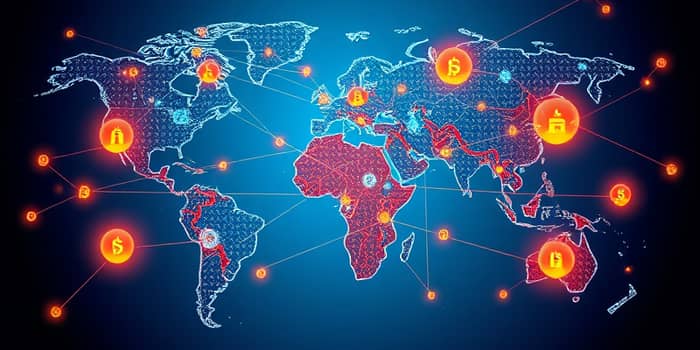
In recent years, the global supply chain landscape has undergone a remarkable transformation. With the market projected to grow from USD 2,258.1 million in 2023 to an astonishing USD 192,927.7 million by 2030, blockchain has emerged as the driving force behind this revolution. Stakeholders across food, pharmaceuticals, manufacturing, and retail are embracing this technology to unlock unprecedented levels of end-to-end visibility and accountability.
Far beyond a mere buzzword, blockchain offers real solutions to age-old supply chain challenges. From farm to factory, port to retail shelf, it promises to reshape how goods move, data flows, and trust is established.
One of the most compelling advantages of blockchain is its ability to create immutable time-stamped records for every transaction. When paired with IoT sensors and RFID tags, businesses can monitor temperature, humidity, location, and handling conditions in real time, ensuring integrity across every link.
These capabilities foster consumer trust and regulatory compliance. Retail giants like Walmart and luxury houses such as LVMH have demonstrated how transparent provenance can enhance brand value and protect public health.
Smart contracts—self-executing code stored on a blockchain—automate payments, audits, and compliance checks. By eliminating manual handoffs and paperwork, organizations realize significant cost savings and speed improvements.
By streamlining administrative tasks and replacing legacy systems, companies free up resources to innovate, entering new markets with agility.
Blockchain’s versatility shines through its broad range of use cases across sectors. It adapts to specific pain points, delivering measurable gains:
Each success story underscores the power of distributed ledgers to unite stakeholders around a single source of truth, driving both collaboration and competition.
Despite its promise, blockchain integration is not without hurdles. Scalability remains a concern when processing thousands of transactions per second, and legacy systems often resist seamless connectivity.
Moreover, return on investment tends to materialize most clearly in high-pain areas—customs clearance, quality audits, and anti-counterfeit measures—rather than across every function. Organizations must conduct thorough pilots and deploy modular platforms that grow with business needs.
Looking ahead, the convergence of blockchain with AI, advanced sensors, and 5G connectivity will enable supply chains to become truly proactive. Imagine perishable goods rerouted automatically when deterioration is detected, or carbon footprints tracked and monetized in real time.
Public blockchain networks, offering robust security and transparency, will foster new cooperative models, allowing smallholders and consumers to engage directly in global commerce. Sustainability will emerge not as a checkbox but as a performance metric, with every badge of origin and emissions report permanently recorded.
North America, currently leading adoption, will continue to set the pace. Yet, emerging markets stand to gain the most, leapfrogging traditional infrastructure to build resilient, trust-driven supply ecosystems.
Blockchain is more than technology—it is a catalyst for cultural change in supply chain management. By championing transparency, automation, and collaboration, businesses can reduce waste, protect consumers, and unlock new streams of value.
As you explore blockchain initiatives, remember to start small, measure rigorously, and scale strategically. The journey may be complex, but the rewards—a sustainable, secure, and efficient global supply chain—are well worth the effort.
References