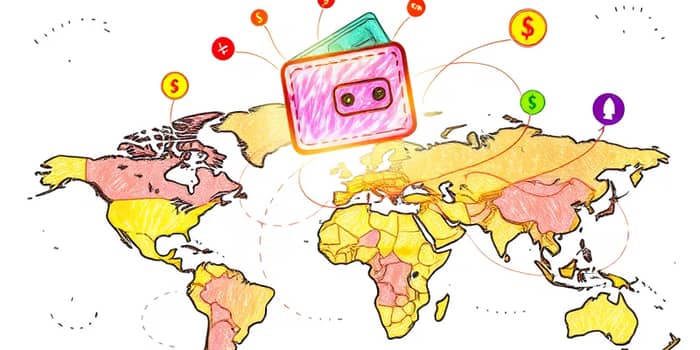
In a world woven together by commerce and digital innovation, businesses and individuals face mounting pressure to move money quickly, affordably, and securely across borders. Traditional banking rails can be slow, costly, and opaque—frustrating anyone striving to reach customers, pay suppliers, or compensate remote teams. The Global Wallet emerges as a transformative solution, promising seamless cross-border payments and unprecedented convenience in a single digital hub.
At its core, a Global Wallet is more than a bank account. It is a multi-currency platform designed to let users hold, manage, send, and receive funds in numerous currencies—all within one streamlined interface. Imagine accessing a virtual IBAN for inbound/outbound transfers, then dispatching a payment in euros one moment and withdrawing Hong Kong dollars the next, without cumbersome paperwork or hidden fees.
This new paradigm eliminates the need for multiple foreign bank accounts. Whether you operate a growing startup, oversee an international nonprofit, or work as a freelancer in global markets, the Global Wallet empowers you to act like a local, everywhere.
The technology behind Global Wallets marries real-time currency exchange, domestic payment rails, and user-friendly mobile or web apps. Most wallets offer the following capabilities:
Top-up options vary: bank transfers, debit cards, or integrated accounting workflows. Many wallets integrate directly with business systems, providing integrated accounting and reconciliation to simplify bookkeeping and audit trails.
For enterprises large and small, adopting a Global Wallet can deliver immediate and lasting benefits:
Consider a digital agency in London that hires freelancers in Manila, Nairobi, and São Paulo. Instead of navigating separate banking relationships in each country, the firm uses one Global Wallet to fund local accounts instantaneously—ensuring timely payments and maintaining strong professional relationships.
Not all Global Wallets are created equal. Key differences often include the number of supported currencies, fee structures, and additional features like loyalty programs or ATM access. The table below highlights three prominent providers:
When choosing a provider, evaluate your typical transaction volumes, preferred currencies, and integration needs. Some wallets cater to enterprises; others excel for freelancers or SMEs.
The Global Wallet sits at the intersection of broader financial evolution. Consider these related trends:
Together, these forces ensure the global payments landscape will become ever more agile, accessible, and customer-centric.
No solution is perfect. Some currencies may lack instant rails, and regulatory compliance can introduce onboarding delays. Crypto options carry volatility and jurisdictional uncertainty. To mitigate these risks:
- Choose a provider with strong regional partnerships to maximize transaction reach.
- Utilize FX hedging tools if volatility is a concern.
- Maintain clear documentation to satisfy KYC and AML requirements.
The Global Wallet represents a seismic shift in how money moves around the world, making frictionless, transparent, and rapid payments a reality for businesses and individuals alike. By consolidating all currencies under one digital roof, you free yourself from legacy banking bottlenecks and unlock fresh opportunities for growth.
Whether you’re a startup founder, a multinational enterprise, or a remote freelancer, the time to explore a Global Wallet is now. Harness its power to streamline your operations, delight your partners, and position your organization at the forefront of financial innovation.
References