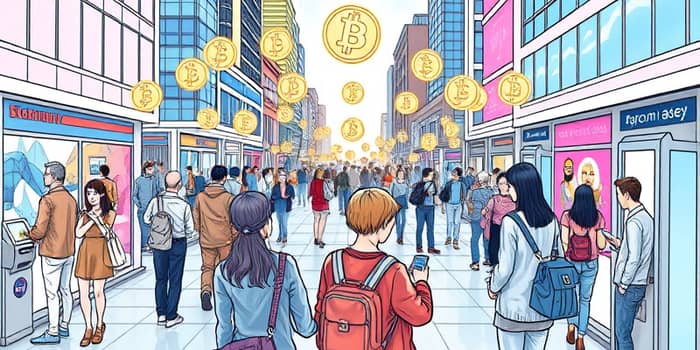
Across the globe, the financial landscape is shifting at an unprecedented pace. Consumers and businesses alike have embraced digital solutions, driving a rapid global shift to cashless payments. From bustling urban centers to remote communities, innovations in mobile wallets, contactless cards, and cryptocurrencies are redefining how value moves. As paper currency recedes, the question emerges: what role will crypto play in a world that is increasingly cashless?
In 2024, 85% of point-of-sale transactions were processed without physical cash, with projections reaching 94.1% in the United States by 2027. Mobile wallets will account for 60% of the world population by 2025, and global digital payment transaction value is set to hit $23.1 trillion by 2030. These figures underscore staggering growth in digital wallets that extend beyond convenience to foster unprecedented levels of financial inclusion.
Regional variations reveal a tapestry of adoption. In Japan, over 78% of consumers use cashless methods for the majority of purchases, while Australia’s cash share plunged from 70% in 2007 to 13% today. Even in regions with strong cash traditions, urban Asia-Pacific adults demonstrate an 85% cashless usage rate. Such data illustrates that the transition is not a singular trend but a multifaceted movement, influenced by infrastructure, culture, and policy frameworks.
While digital payments surge, cryptocurrency adoption stabilizes around 30% among U.S. adults. That equates to 70.4 million people owning Bitcoin, Ethereum, or altcoins in 2026. This cohort is optimistic: 53% of ever-owners report positive returns, and 61% plan to buy more coins this year. Yet non-owners remain wary, citing unstable value and cyber risks as key deterrents.
Demographic patterns reveal Gen Z and younger Millennials driving interest, while skepticism persists among older generations. Political factors also play a role: 52% of respondents credit recent policies with boosting crypto values, and 46% say regulatory shifts have mainstreamed adoption. This interplay of sentiment, policy, and market performance shapes a dynamic adoption landscape.
As consumers seek novel payment methods, merchants are responding. In the U.S., 39% of point-of-sale businesses now accept at least one cryptocurrency. Large enterprises lead the way, with half offering crypto payments, while smaller merchants are catching up. On average, 26% of sales for adopters come through digital coins, and 72% report increased crypto transactions over the past year.
Leading sectors include hospitality, travel, gaming, and luxury retail, where digital natives drive demand. A majority of merchants (84%) believe crypto will be commonplace within five years, forecasting a marketplace where digital wallets integrate both fiat-backed cards and blockchain-based currencies for seamless purchases.
No transformation is without obstacles. Security remains paramount: 59% of non-owners lack confidence in crypto’s protections. Illicit uses persist, with $158 billion funneled into illicit wallets in 2025 alone. Volatility challenges everyday transactions, and the risk of surveillance or exclusion concerns those who value cash’s anonymity. Critics warn that a fully cashless ecosystem could exacerbate inequality for the unbanked or technophobic.
Regulatory frameworks vary widely. Some governments champion digital finance to boost GDP by up to 6% in emerging economies, while others enforce strict measures to curb speculative trading or illicit flows. Striking the right balance between innovation and oversight will determine whether crypto payments become a universal convenience or remain a niche tool for early adopters.
Looking forward, the convergence of crypto and digital payments promises new paradigms of financial interaction. Mobile wallets will integrate stablecoins for cross-border remittances, while decentralized finance (DeFi) platforms may offer consumer lending within everyday shopping experiences. Institutional interest is rising, evidenced by a 55% surge in blockchain-related IPOs in 2025 and pro-crypto regulatory proposals in multiple jurisdictions.
As payment networks evolve, interoperability will be key. Consumers will expect to toggle between fiat and crypto within a single app, authorizing purchases with biometric verification and experiencing near-instant settlement. This unified approach may finally bridge the gap between traditional finance and blockchain innovation, fulfilling the promise of borderless, instant, and inclusive commerce.
In a world edging toward near-universal cashlessness, cryptocurrencies stand ready to complement existing systems, offering speed, transparency, and accessibility. By embracing both the opportunities and responsibilities inherent in this transition, consumers, merchants, and regulators can co-create a resilient and equitable financial future. The journey ahead is complex, but the destination—a truly digital, global economy—is within reach.
References