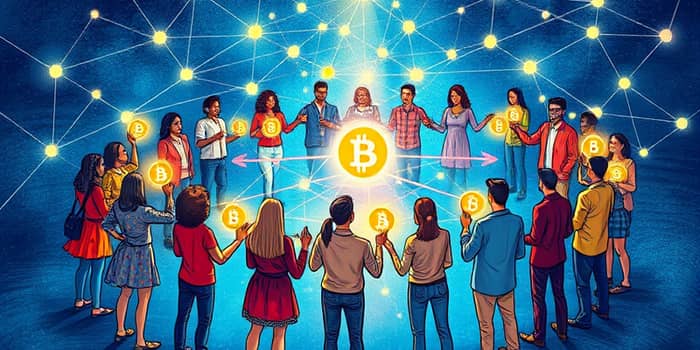
Governance tokens have reshaped how decentralized communities make critical decisions, shifting power away from centralized authorities and into the hands of stakeholders around the globe.
At their essence, governance tokens are specialized cryptocurrencies tied to smart contracts that grant holders on-chain voting rights. These tokens empower communities to propose, debate, and implement protocol changes without middlemen or centralized oversight.
Most models follow a one token = one vote model, where voting power scales with token holdings. Token holders might influence protocol upgrades, treasury allocations, fee structures, or new feature implementations directly through smart contracts that execute decisions transparently.
The first wave of on-chain governance emerged with projects like MakerDAO’s MKR token. MKR holders governed the DAI stablecoin’s interest rates, collateral parameters, and risk management strategies.
Early DAOs automated simple outcomes: token burns, parameter adjustments, or rule modifications. By 2021, Ethereum-based projects such as Yearn Finance (YFI), Compound, Synthetix, Uniswap (UNI), and Gitcoin expanded the scope beyond raw token-weighted voting, revealing both potentials and pitfalls of purely numerical voting power.
These pioneers demonstrated that governance tokens could align incentives between developers, users, and investors—yet they also highlighted challenges like low voter turnout, whale dominance, and governance attacks.
Understanding the basic on-chain voting process is crucial to appreciate subsequent innovations:
As simple voting models matured, governance tokens evolved into multifaceted tools, extending beyond mere decision tallies:
These advanced systems address fundamental issues like whale dominance and low turnout, creating more equitable governance landscapes.
Governance tokens deliver transformative benefits for decentralized ecosystems:
By making every governance step auditable on public ledgers, these tokens prevent hidden agendas and empower communities to self-regulate effectively.
Despite remarkable progress, governance tokens face valid criticisms that spur continual refinement:
Calls for reform advocate hybrid designs that combine token weighting with proofs of unique identity, context-aware voting rights, and reputation-based incentives for more resilient governance.
Governance tokens serve distinct purposes compared to other token classes like utility tokens:
Understanding these distinctions helps participants select appropriate tokens for specific roles within decentralized ecosystems.
The future of governance tokens lies in adaptive, hybrid frameworks that combine the best elements of tokenized and human-centric voting:
Quadratic voting can reduce the sway of large holders, while reputation systems reward genuine contributors. Privacy-preserving identity solutions ensure one-human-one-vote for sensitive decisions, and soulbound tokens can safeguard against vote trading. Together, these advances can foster transparent, community-driven governance without intermediaries and empower diverse voices to shape protocol trajectories.
As blockchain technology and decentralized communities mature, governance tokens will continue evolving—unlocking new ways to align incentives, distribute power, and co-create resilient, inclusive ecosystems.
Embracing these innovations not only addresses current shortcomings but also paves the way for truly democratic, self-sustaining networks where every stakeholder’s voice matters.
References