Economic barometers serve as indispensable tools for investors, policymakers, and analysts seeking to navigate complex market dynamics. By combining multiple variables into composite indices, these barometers offer a concise window into current conditions and near-term trends.
Economic barometers are essentially leading indicators for GDP growth. They synthesize hundreds of data points—ranging from manufacturing output to consumer surveys—into a single reading. This approach extracts meaningful signals from noisy data, helping observers detect turning points before official statistics catch up.
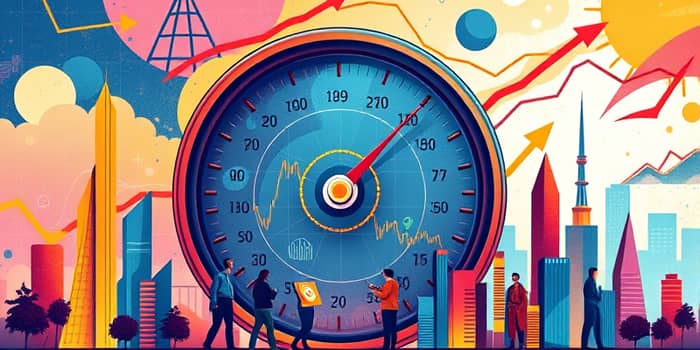
One of the most renowned examples is the KOF Economic Barometer in Switzerland, which tracks over 200 variables grouped into Core GDP, Consumption and Investment, and Financial Markets. Each component is standardized, seasonally adjusted, and scaled to an average of 100, providing a clear monthly snapshot of expansion or contraction.
The calculation process typically involves two stages. In the Identification Stage, analysts select relevant series—production, employment, sentiment—often numbering in the hundreds. The Combination Stage then employs principal component analysis techniques to capture co-movements that reflect the broader business cycle. The resulting index can forecast GDP changes about six months in advance.
Beyond composite barometers, market internals offer additional breadth indicators that confirm or warn of trend shifts. When broad participation accompanies rising indices, it signals a healthy advance; divergence warns of potential reversals.
Five key breadth signals relevant to the January 2026 S&P 500 breakout include:
In tandem, sentiment measures like the University of Michigan’s Consumer Sentiment Index exhibit the statistically significant indicator known as the January Sentiment Effect. A January increase over December often correlates with higher equity returns for the rest of the year.
As the S&P 500 reached all-time highs in January 2026, most barometers point toward continued expansion. Consensus estimates forecast 13.5% EPS growth in the U.S., fueled by AI capital expenditures and low recession fears. Yet this elevated optimism and potential volatility underscores the importance of monitoring warning signs.
Inflation and rate signals from proprietary datasets like State Street PriceStats suggest U.S. goods inflation is plateauing while labor market pressures ease. This environment could prompt the Federal Reserve to pause or moderate hikes. In contrast, Europe may face renewed inflation, and Japan’s cautious tightening may persist.
Regional shifts also merit attention. European earnings disappointed in late 2025, reversing early rotations from the U.S. Meanwhile, investors monitoring behavioral precursors to economic change—customer purchases, hiring trends, merger activity—can gain an edge before official data arrives.
Political and macro uncertainties, such as tariff risks and stretched valuations, remain wildcards. Even robust barometer readings can be upended by policy shocks or sudden shifts in risk sentiment.
To leverage economic and market barometers effectively, investors should integrate them within a diversified framework. Barometers provide directional context, but position sizing and risk management ensure resilience against unexpected reversals.
Policymakers use these indices to gauge labor market trajectories and consumer health, informing decisions on interest rates and stimulus. Corporations can align production schedules and investment plans with forecasted cycles, enhancing operational agility.
Technical traders blend breadth signals with price action concepts, applying tools like Pivot Trend and Smart Money Concepts to fine-tune entry and exit points. Meanwhile, long-term investors may adjust sector allocations based on composite readings and sentiment shifts.
Ultimately, understanding and applying economic barometers fosters a holistic view of market dynamics. By combining quantitative insights with disciplined execution, market participants can navigate uncertainty and harness opportunities across cycles.
References