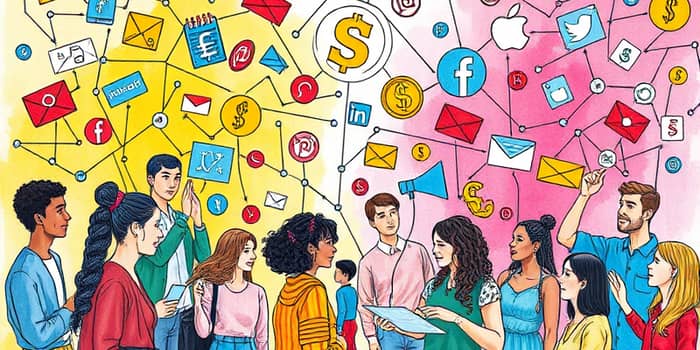
As social platforms transform into modern branch lobbies, banks and credit unions must adapt to build trust, drive engagement, and capture new revenue streams.
In an era where customer expectations hinge on immediacy and authenticity, financial institutions that master social engagement unlock billions in potential growth. Below, we explore strategies, statistics, and real-world examples that illuminate the path forward.
Social channels have evolved beyond marketing to become primary channels for banking engagement. Platforms like Facebook, Instagram, and TikTok serve as discovery engines where users research products, ask questions, and assess credibility.
Trust-building happens when institutions answer inquiries in real time, share genuine member stories, and provide educational content. Credit unions creating local Groups on Facebook, for instance, foster community discourse, highlight financial literacy events, and host staff Q&A sessions. These efforts generate measurable outcomes in account openings and referrals.
Yet digital abandonment remains a challenge: more than 50% of deposit applications and 75% of loan requests drop off before completion. By integrating social features—like one-click lead forms and instant chatbots—banks can reduce friction and re-engage prospects where they spend their time online.
Each social network requires a tailored approach. Below are platform-specific tactics that drive acquisition and loyalty.
Financial institutions that blend paid and organic social see 32% higher conversion rates. Interactive formats like Reels drive 22% more interactions than standard video posts, demonstrating the power of dynamic storytelling.
AI and machine learning supercharge social strategies by delivering real-time, context-aware interactions. Chatbots powered by GPT models can answer routine questions, triage support requests, and even guide users through application processes without human intervention.
Beyond automation, hyper-personalization emerges through first-party data. Institutions can tailor product recommendations, promotional offers, and educational content at the individual level. According to industry benchmarks, personalized calls-to-action nearly double conversion rates, while 88% of marketers plan to deploy AI for this purpose.
AI-driven search integration on social platforms ensures that business posts are indexed for discovery, effectively extending SEO into the social sphere. This creates a unified journey where users encounter relevant content whether they search on Google or browse Instagram.
Linking social activity to business outcomes remains critical. Key metrics include cost per lead (CPL), cost per acquisition (CPA), loan conversion rates, and share of wallet growth.
Data silos and compliance concerns can hinder personalization efforts. Only half of financial institutions score above 50 on data utilization. To overcome this, banks must invest in unified data platforms and cross-functional governance that maintain customer privacy while enabling insights-driven campaigns.
By continually testing ad formats, refining messaging, and analyzing funnel performance, institutions can optimize ROI and defend against fintech disruptors.
In 2026, social media will solidify as core infrastructure for customer acquisition, engagement, and retention. Expect conversational banking experiences that seamlessly blend social, mobile apps, and branch visits into a cohesive journey.
AI will evolve from simple chatbots to empathetic advisors, capable of detecting life events and proactively offering support. As privacy regulations tighten, first-party data strategies will become paramount, enabling hyper-personalization via first-party data without compromising trust.
Financial institutions that master these trends will unlock $5-10 billion in new revenue by achieving digital parity and strengthening local ties. Those that hesitate risk losing younger members—Gen Z is twice as likely to switch banks for superior digital experiences.
Ultimately, the intersection of banking and social media presents a historic opportunity. By embracing authenticity, leveraging AI, and measuring outcomes with rigor, banks and credit unions can transform social platforms into thriving branch lobbies and forge deeper, more profitable relationships with their customers.
References