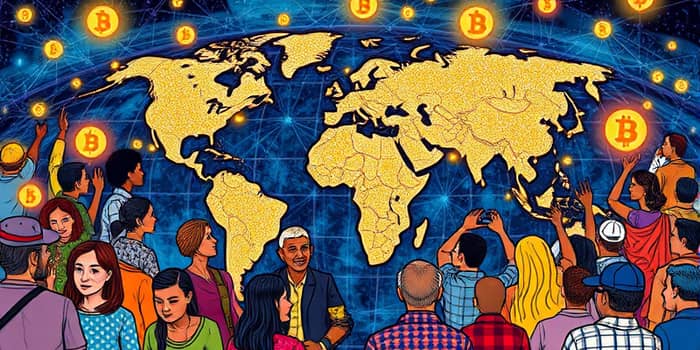
Ever since the birth of blockchain technology, a powerful promise has emerged: the ability to trade assets without intermediaries. Decentralized exchanges, or DEXs, stand at the vanguard of this revolution, offering users unprecedented autonomy and control. By eliminating centralized custodians, these platforms redefine our relationship with money, empowering individuals across the globe to embrace a truly open financial system.
At the heart of every DEX lies the principle of self-custody. Users retain complete ownership of their funds by connecting their wallets directly to the exchange. No third party holds keys or controls assets. This non-custodial model ensures that each trader remains the sole arbiter of their digital wealth, able to manage transactions on their terms without external interference or arbitrary restrictions.
In contrast, centralized platforms require users to deposit assets into exchange-controlled wallets, relinquishing direct oversight. The DEX model restores full control of their funds to each individual, creating a landscape where financial decisions cannot be overridden, censored, or revoked by opaque corporate policies.
Decentralized exchanges operate via transparent deterministic smart contracts deployed on public blockchains. Every trade, settlement, and fee mechanism is encoded in open-source code, visible and verifiable by all. This transparency greatly reduces the need for trust. Users can audit the entire process, from order matching to final settlement, ensuring that transactions execute exactly as intended and eliminating concerns over hidden fees or unfair practices.
On-chain settlement means funds move directly between wallets without passing through a central ledger. This trustless environment protects users against platform insolvency, unauthorized freezes, and clandestine trading activities.
One of the most compelling attributes of DEXs is their resistance to censorship. With no central authority to dictate who may trade, anyone with a compatible wallet and an Internet connection can participate. This permissionless participation requiring only a basic setup levels the playing field, granting traders in underserved regions access to global markets.
Centralized exchanges have historically been vulnerable to hacks, mismanagement, and abrupt shutdowns. The infamous collapse of Mt. Gox in 2014, which saw hundreds of thousands of bitcoins lost, serves as a stark reminder of centralized custody risks. By contrast, DEXs enable traders to stay in control of their assets at all times, drastically mitigating counterparty risk and reducing the concentration of funds in any single entity.
Through on-chain settlement, assets move directly between wallets, and traders face lower systemic threats. This model not only protects individual holdings but also enhances the resilience of the broader crypto ecosystem.
DEXs do not exist in isolation; they form the backbone of the decentralized finance universe. Through composability, these platforms integrate seamlessly with lending protocols, stablecoins, derivatives markets, and tokenized real-world assets. Developers can build on top of existing DEX infrastructure, creating new financial instruments and automated strategies that push the boundaries of innovation.
This open architecture encourages experimentation and fosters a vibrant community of builders, all united by the goal of expanding access and efficiency in the global financial ecosystem.
Across regions with limited banking infrastructure, decentralized exchanges have become gateways to global financial networks. From small agricultural communities to urban entrepreneurs, individuals leverage peer-to-peer swaps and decentralized lending to access capital, hedge against inflation, and participate in international markets without intermediaries. This trend underscores the revolutionary potential of DEXs to foster financial opportunities for underserved populations and transform lives through digital asset empowerment.
Whether sending remittances across borders or saving value outside volatile local currencies, anyone with a smartphone can harness the power of permissionless trading. As mobile network coverage expands, these platforms bridge economic divides, creating a more inclusive and resilient global economy.
Diving into decentralized trading begins with setting up a self-custodial wallet. From MetaMask to Trust Wallet, users choose a client that aligns with their security preferences. Once configured, connecting to leading DEX platforms is as simple as approving a wallet signature. Traders can explore token swaps, provide liquidity to pools, or experiment with yield farming strategies.
Before engaging, it is crucial to research each protocol’s smart contracts and community governance. Always prioritize security of private keys by using hardware wallets or secure storage solutions. Continuous learning, coupled with prudent risk management, ensures a rewarding and sustainable DeFi journey.
Despite their transformative potential, decentralized exchanges face several hurdles. From network congestion and transaction fees to smart contract vulnerabilities and lower liquidity, traders must navigate these challenges carefully. In addition, regulatory ambiguity and the responsibility of securing private keys introduce a learning curve that can deter newcomers.
As decentralized exchanges evolve, they promise to democratize access to financial services on an unprecedented scale. Innovations like cross-chain bridges, layer-two solutions, and decentralized identity systems will address existing limitations and propel DEXs into the mainstream. For millions of users in developing economies, this shift can unlock pathways to economic empowerment previously out of reach.
Embracing the DEX revolution means championing transparency, autonomy, and inclusivity. By exploring these platforms responsibly and advocating for open standards, each of us can contribute to a more equitable financial future where freedom truly matters. The journey toward decentralized finance is collective, and every voice, developer, and trader has a role to play in shaping this transformative ecosystem.
References