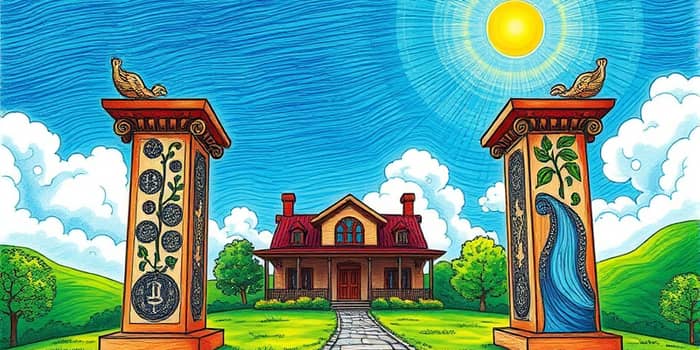
At the core of lasting wealth is a robust structure that endures economic storms and personal uncertainties. By envisioning your finances as a dwelling built on solid supports, you gain clarity on how each element contributes to long term stability.
This guide weaves together national policy insights, faith based ethics, personal mindsets, and practical tools into a cohesive blueprint for building a secure financial house.
Economist Art Laffer describes five essential pillars that underpin a nation’s prosperity. Like bedrock beneath a home, these elements create an environment where individuals and businesses can thrive.
These pillars remind us that we are the stewards of our collective economy and that responsible policy choices ripple through every household.
When national frameworks emphasize growth and stability, individual efforts receive a supportive backdrop. A healthy economy is the foundation upon which personal prosperity can flourish.
For centuries, religious traditions have offered holistic approaches to wealth, blending material well being with moral obligations. The Islamic Five Pillars of Prosperity extend beyond ritual to foster justice and community welfare.
By integrating spiritual values with financial actions, this framework creates a system resilient to both market swings and moral decline.
Embracing holistic prosperity beyond finance inspires a vision where wealth is measured by shared well being, not just personal accumulation.
Prosperity is more than a number in an account. The Prosperity Economics Movement invites you to view your personal economy as an ecosystem where mindset and strategy intertwine.
This ecosystem approach teaches that wealth isn’t just how much money you hold but how much control, freedom, and opportunity you create.
By orchestrating these principles, you build a resilient interior for your financial house, one that adapts to change and amplifies success.
At the practical level, four actionable areas keep your structure from cracking under pressure. These pillars address day to day life and urgent situations.
By maintaining these supports, you ensure that surprises—job loss, medical expenses, or market downturns—test your plans but do not shatter them.
Your financial home stands on layers of strength. The national and policy foundations provide the land on which you build. Faith based ethics craft your moral walls. The 12 principles form the beams and trusses. Practical pillars shape your daily routines and emergency defenses.
Start by assessing each element. Are your macro expectations aligned with policy realities? Do your values inform every dollar decision? Is your mindset tuned to both stability and opportunity? Have you layered in emergency savings and prudent borrowing?
Creating this structure demands time, self reflection, and continuous adjustments. As walls shift, reinforce them with learning and community support. As roofs leak, patch them with disciplined habits and fresh insights.
Ultimately, a truly abundance versus scarcity mindset transforms challenges into invitations for growth. Like a well built house, your financial system will weather storms and welcome sunny days, offering shelter and possibility for generations to come.
Embark now on the journey to build your own secure financial house. With purpose, prudence, and perseverance, you will not only protect your wealth but cultivate a legacy of prosperity that stands the test of time.
References