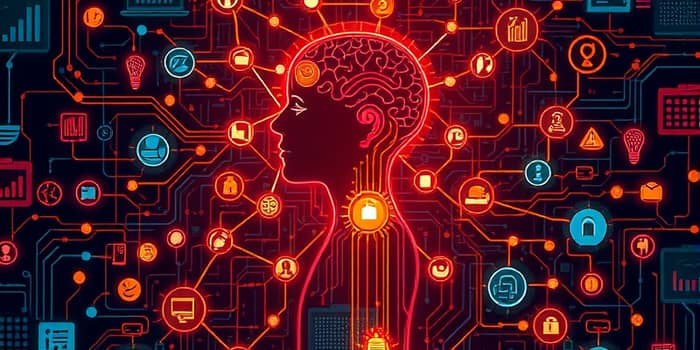
In an age defined by the rapid rise of artificial intelligence, finding the balance between automated power and human insight has become paramount. The Human-in-the-Loop (HITL) approach weaves human judgment into critical AI processes, ensuring that machines learn and adapt through real-world feedback. This synergy not only enhances performance but also builds trust in high-stakes environments where error margins must be near zero. From healthcare diagnostics to autonomous vehicles, HITL stands as a bridge between raw computational might and the nuanced understanding only people can provide.
At its essence, Human-in-the-Loop AI integrates human review, oversight, and feedback into the AI lifecycle. During training, validation, or during real-time inference, systems flag uncertain or sensitive outputs for human intervention. This creates a blend machine efficiency with human intuition that safeguards against biases, hallucinations, and unintended consequences. The process is cyclical: AI models generate predictions, humans refine or correct them, and algorithms adjust based on these insights, resulting in continuous improvement.
This methodology shines brightest in domains where context and ethics are crucial. Fully automated systems can misinterpret ambiguous inputs or perpetuate hidden biases, leading to costly mistakes. HITL mitigates these risks by inserting a human checkpoint, ensuring that AI-driven decisions align with real-world values and regulations. The result is an ecosystem where algorithms operate at scale, yet remain anchored by human discernment.
Organizations adopting HITL report transformative gains in accuracy, efficiency, and user confidence. By harnessing both machine speed and human expertise, teams can tackle complex tasks with unprecedented precision. Consider these compelling metrics:
These statistics demonstrate that HITL does more than patch AI’s weaknesses—it propels innovation. By reducing manual errors by up to 86% in administrative healthcare tasks and ensuring compliance in financial audits, HITL becomes a cornerstone for responsible, regulated AI deployment.
Integrating humans into AI workflows requires thoughtful design of interfaces, feedback mechanisms, and governance policies. Key stages include data annotation, model evaluation, active inference, and post-deployment monitoring. Each stage demands tailored human roles and supporting tools to maintain quality and transparency.
Throughout these stages, every human correction feeds back into model retraining. This feedback loop not only refines predictions but also evolves the system’s understanding of edge cases, cultural nuances, and evolving regulatory frameworks.
HITL has found fertile ground in sectors where errors carry significant consequences. By placing knowledgeable professionals at decision junctions, organizations harness the best of both worlds.
In each scenario, humans do more than check work—they bring critical context. When an AI suggests an unusual treatment path or flags a complex financial transaction, human experts assess implications that data alone might not reveal.
Deciding when to involve humans depends on risk tolerance, regulatory demands, and the nature of the task. For low-risk, repetitive workflows—such as bulk data transformations—fully autonomous systems may suffice. However, in high-consequence environments where missteps can have legal, ethical, or safety repercussions, HITL is indispensable.
The most effective AI strategies blend both approaches: delegate routine tasks to machines, reserve human oversight for edge cases, and continuously refine decision thresholds based on operational feedback. This balanced model maximizes efficiency without sacrificing accountability.
Despite its transformative potential, HITL faces hurdles. Designing intuitive review interfaces, establishing clear escalation protocols, and managing large-scale human workforces demand significant investment. AI hallucinations and biased outputs persist as ongoing obstacles, requiring robust governance and continuous training.
Looking ahead, HITL will evolve beyond simple review loops. Emerging platforms are embedding human guidance into autonomous agents, creating drive accountable and transparent AI that adapts on the fly. In regulated industries—like healthcare, finance, and aviation—these frameworks will become standard practice by 2026 and beyond. As AI adoption accelerates, the human touch remains not just a safeguard, but a dynamo for innovation.
By championing the synergy of people and machines, organizations can build systems that are not only powerful, but also ethical, fair, and trustworthy. Human-in-the-Loop AI stands as a testament to what can be achieved when the best of both worlds come together.
References