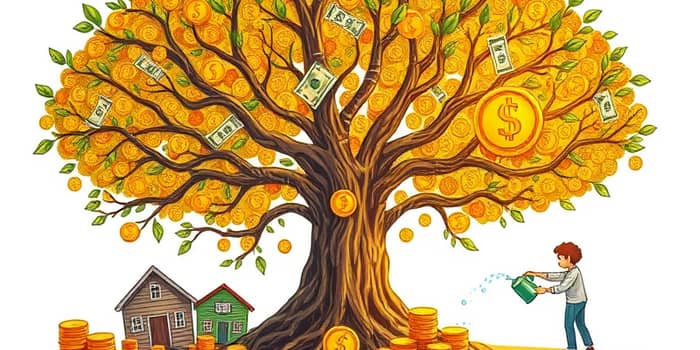
Every great achievement begins with a dream. You envision waking up each morning without the constraints of a 9-to-5 job, free to travel, pursue passions or simply enjoy quality time with loved ones. While the idea of achieving true financial independence can feel distant, you have the power to transform that vision into reality by building streams of passive income that steadily deliver returns.
Passive income refers to earnings that require minimal ongoing effort once the initial work or investment is in place. Unlike active income—where your time directly translates to dollars—passive streams continue generating cash flow, allowing you to reclaim your most valuable asset: time. In this journey from dreams to dividends, we will explore diverse ideas, emphasize the strength of dividend investing and equip you with actionable steps to set compounding wealth into motion.
At its core, passive income is the art of making your money work for you. After dedicating time to set up your venture or investment, your involvement shrinks while income persists. This model allows you to benefit from ongoing returns without trading additional hours for each dollar earned.
Key advantages include an effective hedge against inflation, the ability to diversify beyond traditional savings, and a pathway to building wealth over decades. Moreover, passive income can reduce financial stress, enabling you to focus on creative projects, philanthropic initiatives or simply enjoying life free from constant financial worries.
Passive income can complement or eventually replace active earnings, facilitating early retirement goals or enabling you to pursue higher-risk ventures without jeopardizing your baseline cash flow. By understanding its mechanics, you position yourself to choose the right strategies aligned with your risk tolerance and personal ambitions.
Every investor’s journey is unique. Some prioritize low-risk accounts, while others chase higher returns via entrepreneurial paths. To build a resilient portfolio, consider combining opportunities across multiple categories. The list below highlights core options with earning potential and platform examples.
By blending several of these streams, you benefit from different growth rates, risk profiles and payout schedules, ensuring that one underperforming asset does not derail your entire plan.
Among all passive strategies, dividend investing stands out for its simplicity and proven track record. When you purchase shares of a dividend-paying company, you become entitled to regular payouts funded by corporate profits. Over time, these distributions can form a significant portion of your total returns.
Dividends not only provide immediate income but also act as a stabilizing force during market downturns. Companies committed to dividend growth often maintain strong cash flows and disciplined capital allocation. By choosing quality names with a history of steady increases, you tap into consistent and sustainable cash flows that cushion volatility and deliver peace of mind.
Beyond cash payments, enrolling in a dividend reinvestment plan (DRIP) allows you to automatically purchase additional shares with your payouts. This reinvestment supercharges growth by leveraging the power of compounding—your dividends earn dividends, accelerating your wealth creation without any extra work.
Selecting the right approach hinges on your goals, risk appetite and time horizon. The table below presents four popular dividend strategies, offering a clear comparison of methods and key evaluation metrics:
Each technique underscores the importance of prioritizing financial health over chasing the highest yields. Sustainable dividends derive from robust earnings, manageable debt levels and consistent cash flow generation.
While dividends provide appealing rewards, no investment is risk-free. Understanding potential challenges ensures you maintain a resilient portfolio through all market cycles.
Best practices include regular financial statement reviews, monitoring payout ratios and free cash flow, and maintaining diversified exposure across sectors and geographies. Automate reinvestments to preserve disciplined and steady long-term growth.
Getting started is more accessible than you might think. Follow this simple roadmap to set your plan in motion:
By committing to small, consistent steps, you harness the transformative effects of time and compounding. Within a few years, your portfolio’s dividend yield alone can rival or surpass a modest salary.
Transitioning from dreaming about financial freedom to enjoying it requires intention, education and discipline. Passive income streams, anchored by dividend investing, offer a clear path to turn aspirations into sustainable reality. As your portfolio grows, each dividend payment brings you closer to a life defined by choice rather than obligation.
Embrace the journey ahead, remain patient through market fluctuations and celebrate every milestone—no matter how small. With each reinvested dividend, you further cement your foundation for long-term sustainable wealth accumulation. Now is the moment to act, plant the seeds of your future and watch as your money works tirelessly for you.
References