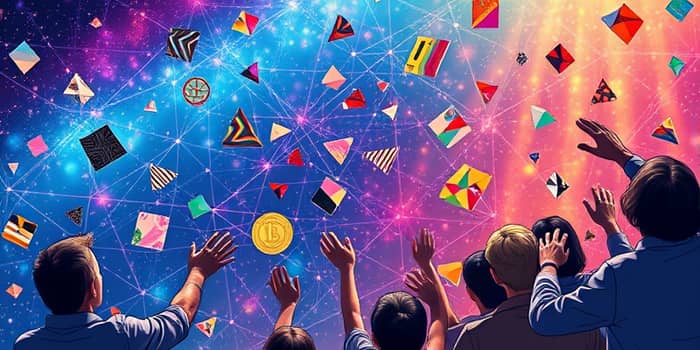
In an era where digital creativity soars and exclusive artworks command eye-watering prices, a transformative innovation is reshaping how we engage with digital art. Fractionalized NFTs break down barriers and invite a new wave of collectors, enthusiasts, and artists into a shared space of opportunity.
Fractionalized NFTs, often called F-NFTs, offer a revolutionary approach by dividing ownership into smaller, fungible parts. Instead of a single owner controlling an entire digital artwork, ownership is split into multiple tokens, each representing a percentage stake in the whole.
This concept bridges the gap between exclusivity and accessibility. Just as a rare painting in a museum might be too costly for one individual, a high-value NFT can now be co-owned by many. Each fraction is interchangeable, creating a level of liquidity and engagement previously unheard of in the NFT space.
The process behind fractional NFTs leverages smart contracts and blockchain transparency. It unfolds through four essential steps:
Each fraction boasts full transparency: blockchain records document every transaction, and smart contracts enforce the rules without intermediaries.
Fractionalization does more than democratize art; it sparks community and collective ownership. For collectors, it lowers the entry barrier, making blue-chip digital art accessible without a huge upfront investment. For artists, it opens new avenues of engagement and revenue sharing.
The momentum behind fractional NFTs is undeniable. Industry experts forecast the market to expand from $3.8 billion in 2025 to $9.2 billion by 2033, driven by increased digital adoption and innovative applications.
Beyond raw figures, the broader NFT ecosystem is surging, with projections leaping from $43 billion in 2025 to over $245 billion by 2029. Gaming NFT volumes, metaverse land, and phygital collectibles are converging with fractionalization, forging a dynamic marketplace.
Diving into fractional NFTs need not be daunting. Follow these guidelines to start your journey:
By opening doors to a wider audience, fractionalized NFTs ignite fresh creativity and ownership models. Artists can reach global communities, and collectors can share in the excitement of landmark works without prohibitive costs.
This collective approach cultivates a deeper connection between art and audience—each fraction symbolizes not just an investment, but a piece of a shared story, an opportunity to champion digital artistry together.
Fractionalized NFTs herald a new chapter in the evolution of digital art. They herald an inclusive era where high-value assets are no longer the exclusive domain of a privileged few but a shared frontier for creators and collectors alike.
Embrace the potential, arm yourself with knowledge, and take part in a movement that is not only reshaping markets but redefining cultural ownership. The future of art is fractional—and its promise lies in empowering communities through shared investment. Dive in, explore, and become part of this transformative narrative.
References