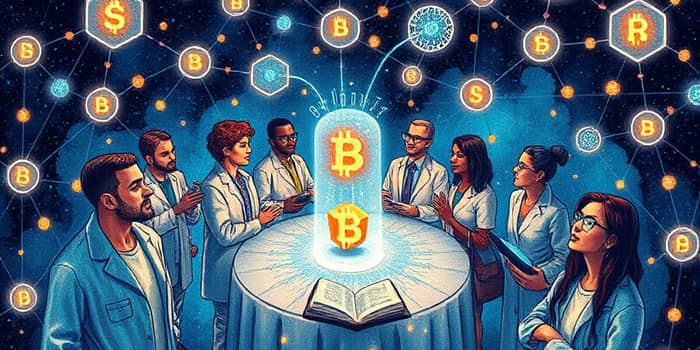
In an era where innovation often stalls behind institutional walls, Decentralized Science (DeSci) emerges as a beacon of possibility. By merging blockchain, Web3 tools, and community governance, this movement promises to transform how we create, share, and fund knowledge.
At its core, DeSci leverages blockchain technology, smart contracts, and decentralized networks to rewrite the scientific story. Rather than relying on traditional journals and centralized funders, research becomes a public good, accessible to anyone with an internet connection.
This paradigm builds upon the principles of Open Science and MetaScience, but it goes further—tokenizing research outputs, rewarding replication efforts, and enabling community-driven decisions through DAOs (Decentralized Autonomous Organizations).
For decades, the scientific community has wrestled with systemic barriers that hamper progress and equity. DeSci directly addresses these issues:
Blockchain brings distinct capabilities that address core scientific needs. Below is a concise overview:
Across the globe, DeSci projects are already reshaping the research landscape:
DeSci’s influence extends far beyond technological novelty. It redefines how communities engage with science:
First, it democratizes funding and decision-making, allowing individuals worldwide to support early-stage breakthroughs. It also incentivizes undervalued tasks, such as replication studies and meticulous reviews, by attaching tangible rewards to these efforts.
Moreover, by treating knowledge as a public good, DeSci fosters global, cross-disciplinary collaboration that transcends borders and institutional hierarchies. Researchers retain ownership via IP-NFTs and share in downstream revenues, ensuring fair recognition and sustainable models.
Despite its promise, Decentralized Science faces hurdles on its path to maturity. Many projects still lack full DAO governance, and community-building remains an ongoing effort. Regulatory uncertainties around tokens and intellectual property also demand thoughtful solutions.
Yet momentum is growing. Partnerships between DeSci initiatives and academic institutions are on the rise, and pilot programs integrating AI-driven analytics hint at unprecedented speed and transparency in research pipelines.
As these ecosystems evolve, we can anticipate a future where innovation accelerates responsibly, bridging the gap from discovery to real-world impact, and empowering scientists and citizens alike.
The contrast between conventional research frameworks and the decentralized approach highlights the revolutionary potential of blockchain-enabled science:
Decentralized Science is not merely a technological shift—it is a cultural revolution in how we perceive and practice research.
To engage with this movement and help its growth, consider the following steps:
By taking these actions, you contribute to a more inclusive, efficient, and transparent scientific ecosystem—one that empowers every mind to shape the future of discovery.
References