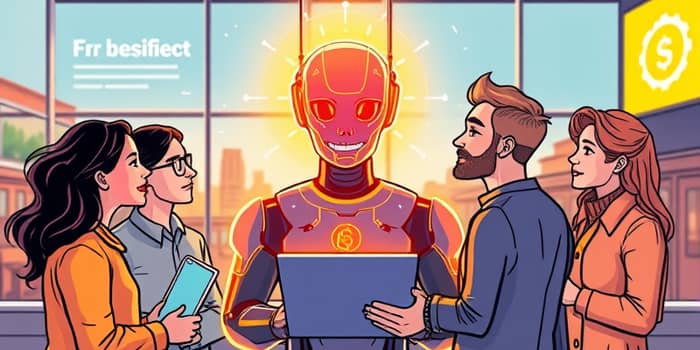
As customer expectations evolve, brands seek ways to bridge the gap between efficient automation and genuine human connection. Emotion AI, also known as affective computing, offers a promising path forward. By analyzing sentiment, tone, and speech patterns, emotion-sensing algorithms adapt interactions in real time, fostering trust and loyalty.
In the financial sector, where stakes are high and emotions run deep, empathy can transform routine inquiries into meaningful exchanges. This article explores how Emotion AI reshapes customer experiences, key statistics fueling its adoption, emerging trends, and practical guidance for implementing empathetic solutions in banking, lending, and wealth management.
Customer service has long balanced speed, accuracy, and personalization. Traditional AI chatbots excelled at answering simple queries, but they often missed the emotional context behind each question. Real-time emotional insights now close this gap, enabling agents—both digital and human—to detect frustration, urgency, or satisfaction.
Emotion AI employs sentiment analysis on text, tone detection in voice calls, and speech-pattern recognition. When a friendly greeting transforms into an urgent plea, the system flags the interaction for a more empathetic response or immediate escalation to a human advisor.
This evolution marks a pivotal shift from transactional to relational service models. Organizations that integrate emotion recognition report higher satisfaction scores and stronger customer loyalty, even in complex domains such as mortgage disputes, investment advice, or fraud resolution.
Recent industry surveys reveal growing confidence in Emotion AI’s capacity to connect at scale. While exact figures vary by region and sector, the following highlights offer a snapshot of current sentiment:
Beyond these figures, organizations report up to a 19% reduction in call costs through AI-enabled coaching, while fast, empathetic responses remain the top driver of customer satisfaction. Yet challenges persist: 68% of consumers cite poor chatbot experiences, and only 25% of contact centers fully integrate automation with human workflows.
As Emotion AI matures, several complementary trends emerge. Together, they promise to elevate service quality and operational efficiency.
Voice and speech analysis tools now track vocal strain, pacing, and pitch to gauge stress or confusion during calls. Meanwhile, natural language processing drives sentiment analysis in chat transcripts, enabling instant sentiment scoring and dynamic response tailoring.
In parallel, predictive analytics use customer history and behavioral signals to forecast emotional states and surface personalized financial advice. For instance, a client viewing loan options online might receive a timely reassurance message explaining each step, easing anxiety around complex decisions.
Financial interactions often involve sensitive topics—disputes over duplicate charges, anxiety about market fluctuations, or anticipation of loan approvals. Emotion AI can transform these moments into opportunities for building trust.
For example, an AI-driven chatbot handling a disputed transaction can detect rising frustration in the customer’s tone. It can then shift its language to a more soothing style, offer clear next steps, and seamlessly hand off the interaction to a specialized fraud team when needed.
Wealth management platforms leverage emotion recognition to gauge investor confidence. A real-time analysis might prompt an AI assistant to suggest a brief educational pop-up or propose a human advisor consultation when apprehension is detected during portfolio reviews.
With trust at stake, financial institutions that deploy these solutions often see improvements in Net Promoter Score (NPS) and reductions in abandonment rates during critical processes like mortgage applications.
Despite its promise, deploying Emotion AI involves strategic and technical hurdles. Organizations must navigate technology integration, data privacy concerns, and agent training to fully realize empathetic customer experiences.
First, integrating emotion intelligence into existing platforms requires collaboration between IT, CX teams, and data privacy officers. Real-time sentiment analysis generates sensitive metadata, so compliance with regulations such as GDPR or CCPA is paramount.
Second, agents need targeted training to interpret AI-generated emotional cues correctly. Without proper guidance, staff may misinterpret signals or underutilize escalation triggers. Continuous coaching programs, supported by AI-enabled quality assurance, help close this skills gap.
Finally, organizations must strike a balance between automated responses and human intervention. Overreliance on AI risks alienating customers who prefer direct human contact, while underuse dilutes operational efficiencies.
By 2026, industry leaders predict Emotion AI will underpin every customer interaction, transcending standard support to proactively nurture relationships. Predictive personalization at scale will become the norm, as AI anticipates emotional needs and delivers tailored experiences across channels.
Advances in multimodal analysis—combining text, voice, and even facial recognition—promise deeper emotional understanding. In financial contexts, such capabilities could allow virtual assistants to recognize nonverbal cues during video consultations, offering a richer, more supportive dialogue.
To prepare, organizations should pilot emotion-aware solutions in targeted use cases, measure impact on key metrics, and refine governance practices. Fostering an empathetic culture—where technology amplifies human connection rather than replaces it—will distinguish tomorrow’s CX leaders.
Emotion AI offers a powerful toolkit for humanizing digital interactions, forging deeper connections, and delivering financial services with warmth and authenticity. By embracing this technology and addressing implementation challenges head-on, companies can transform critical customer moments into lasting relationships built on trust.
References