In a world where every digital transaction demands inherent trust, blockchain consensus mechanisms stand as pioneers in building security without centralized authorities. Imagine a council of distant generals who must coordinate an attack despite a hidden traitor—this centuries-old dilemma, known as the Byzantine Generals Problem, inspired modern engineers to craft a solution for digital trust.
Consensus enables decentralized networks to verify transactions, maintain a shared ledger, and resist malicious actors. Join us on a journey from the brute force of Proof of Work through the refined efficiency of Proof of Stake and into the realm of emerging hybrids shaping the future of trustless systems.
Consensus in blockchain refers to a fault-tolerant protocol for distributed systems that allows independent nodes to agree on a single unified state, even amid failures or adversarial behavior. By aiming to solve the Byzantine Generals Problem, these mechanisms prevent double-spending and ensure identical ledger copies across all participants. They rest on three pillars: safety (honest nodes reach the same conclusion), liveness (new transactions eventually record), and eventual consistency (disconnected nodes reconcile upon rejoining).
Proof of Work (PoW) emerged when Bitcoin launched in 2009, offering the first trustless method for decentralized agreement. Miners deploy specialized hardware to solve cryptographic puzzles—finding a nonce that yields a hash below a target value. The first to solve propagates a new block, and peers validate it. The chain with the highest cumulative work secures the ledger, deterring forks and tampering.
This model delivers high security through economic deterrence, as potential attackers would need over half of the global hashrate—entailing massive investment in electricity and equipment. Yet its significant drawback is high energy consumption and slow speeds, limiting throughput to single-digit transactions per second and raising sustainability concerns.
Bitcoin remains the flagship PoW network, demonstrating resilience and decentralization underpinned by open competition but sparking debates over environmental impact and scalability.
Proof of Stake (PoS) redefines consensus by replacing energy-intensive computation with economic commitment. Validators lock up cryptocurrency as collateral, and a deterministic, sometimes randomized selection process designates block proposers. Misbehavior triggers slashing of the staked amount, aligning incentives with network integrity.
PoS achieves minimal hardware requirements and rapid finality, enabling hundreds to thousands of transactions per second. Participants can join directly or via pooled arrangements, broadening accessibility while maintaining decentralization.
This paradigm shift toward environmentally friendly and cost-effective consensus has powered networks like Ethereum 2.0, Cardano, and Solana, showcasing how staking crypto as collateral fosters security without the carbon footprint of mining.
Below is a side-by-side comparison highlighting core differences between PoW and PoS mechanisms.
As blockchain evolves, innovators blend strengths to overcome limitations. Notable approaches include:
The journey began with Bitcoin’s PoW breakthrough in 2009, solving the double-spend problem for the first time. By the mid-2010s, concerns about energy use and scalability spurred research into PoS alternatives. Ethereum’s 2022 merge to PoS cut network emissions by over 99%, marking a milestone in sustainable blockchain design.
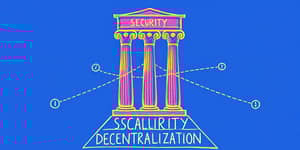
Today, layer-2 rollups, sharding, and zero-knowledge proofs address throughput and interoperability challenges. Researchers pursue architectures that optimize each layer independently, driven by the ambition of balancing security scalability and decentralization across diverse use cases.
Blockchain consensus has matured from the computational arms race of PoW to the economic stewardship of PoS and innovative hybrids. Each model offers unique trade-offs that shape network performance, governance, and environmental impact.
By understanding these mechanisms, developers, entrepreneurs, and users can craft solutions tailored to their vision. Embrace this evolution, contribute to open research, and advocate for designs that resonate with your values. Together, we unlock countless potential applications across industries and propel a transparent, secure, and inclusive digital future.
References