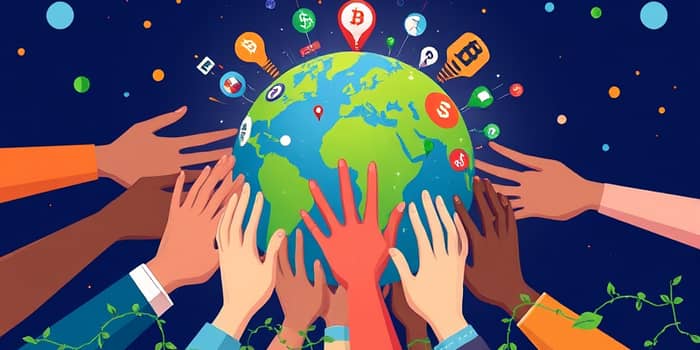
In an era where every transaction can ripple across continents and ecosystems, it has never been more important to understand how our financial decisions shape the world around us. This article explores how individuals, organizations, and communities can transcend mere consumption patterns to build a resilient, collaborative, and secure financial ecosystem.
A financial ecosystem is more than a network of banks and markets; it is an intricate web of money, investments, and economic activities shaped by choices made by individuals, businesses, and governments. This dynamic system mediates capital allocation, technological innovation, and socio-ecological interactions that directly influence human well-being and planetary health.
At its core, a financial ecosystem operates as a complex adaptive system, where private and public actors—including banks, fintech firms, BigTech, regulators, enterprises, and consumers—collaborate to deliver seamless financial services. These participants form networks that stretch from urban centers to remote communities, integrating global markets with local needs.
Many people view finances through the narrow lens of budgeting and spending. Yet every purchase, saving decision, or investment carries a hidden power to redirect resources across supply chains, support innovation, or perpetuate extractive practices.
Consider these ripples:
By recognizing individual agency beyond mere transactions, each of us becomes a steward of the larger system, capable of advocating for transparency, supporting sustainable projects, and demanding accountability from financial institutions.
Modern digital finance thrives on the synergy of diverse actors. The Four Cs Framework provides a roadmap for establishing responsible ecosystems:
Through this model, banks, fintechs, and regulators can overcome silos, aligning incentives and sharing information to foster seamless customer experiences underpinned by shared value and trust.
Trust is the lifeblood of any financial network. Global surveys show that 64 percent of people now trust financial services, up from 62 percent in 2024. This upward trend demonstrates that robust security, transparent governance, and ethical conduct form the bedrock for innovation.
Key strategies for maintaining confidence include:
Examples like the collaboration between Riyad Bank and Mastercard on Cyber Resilience Centers illustrate how joint initiatives can shield entire regions from digital threats, safeguarding consumer data and bolstering resilience.
Financial flows are intimately connected to ecological systems. The money we move today can fund projects that either degrade ecosystems or nurture regeneration. Researchers emphasize that economic growth must respect the planet’s finite resources and capacity to absorb waste.
Hidden links permeate the system:
By adopting an ecological economics perspective, stakeholders can evaluate financial products not only by risk-adjusted returns but by their environmental footprints and social impacts.
As digital journeys converge with everyday life, embedded finance is creating ecosystems where financial services blend invisibly into retail, healthcare, education, and social platforms. This convergence demands a robust ecosystem approach to ensure security and seamless experiences.
Geographical context also matters. Financial networks reflect local customs, regulations, and infrastructure. From community microfinance in rural regions to international platforms serving urban professionals, ecosystems adapt to territorial nuances that shape customer expectations and regulatory requirements.
Whether you are an individual investor, a fintech startup, or a multinational bank, here are actionable steps to cultivate a secure financial ecosystem:
By implementing these practices, each stakeholder can contribute to a safer, more inclusive, and sustainable financial landscape.
Ultimately, cultivating a secure financial ecosystem requires more than technical fixes; it demands a collective shift in mindset. Recognizing that every transaction is a vote for the future, we can harness the full potential of our global network of actors. Through individual choices, collaborative frameworks, and a steadfast commitment to trust and security, we can build a financial ecosystem that serves both people and the planet.
References